
OMEIR
RO3 : Hybrid twins: simulation, learning
Activités
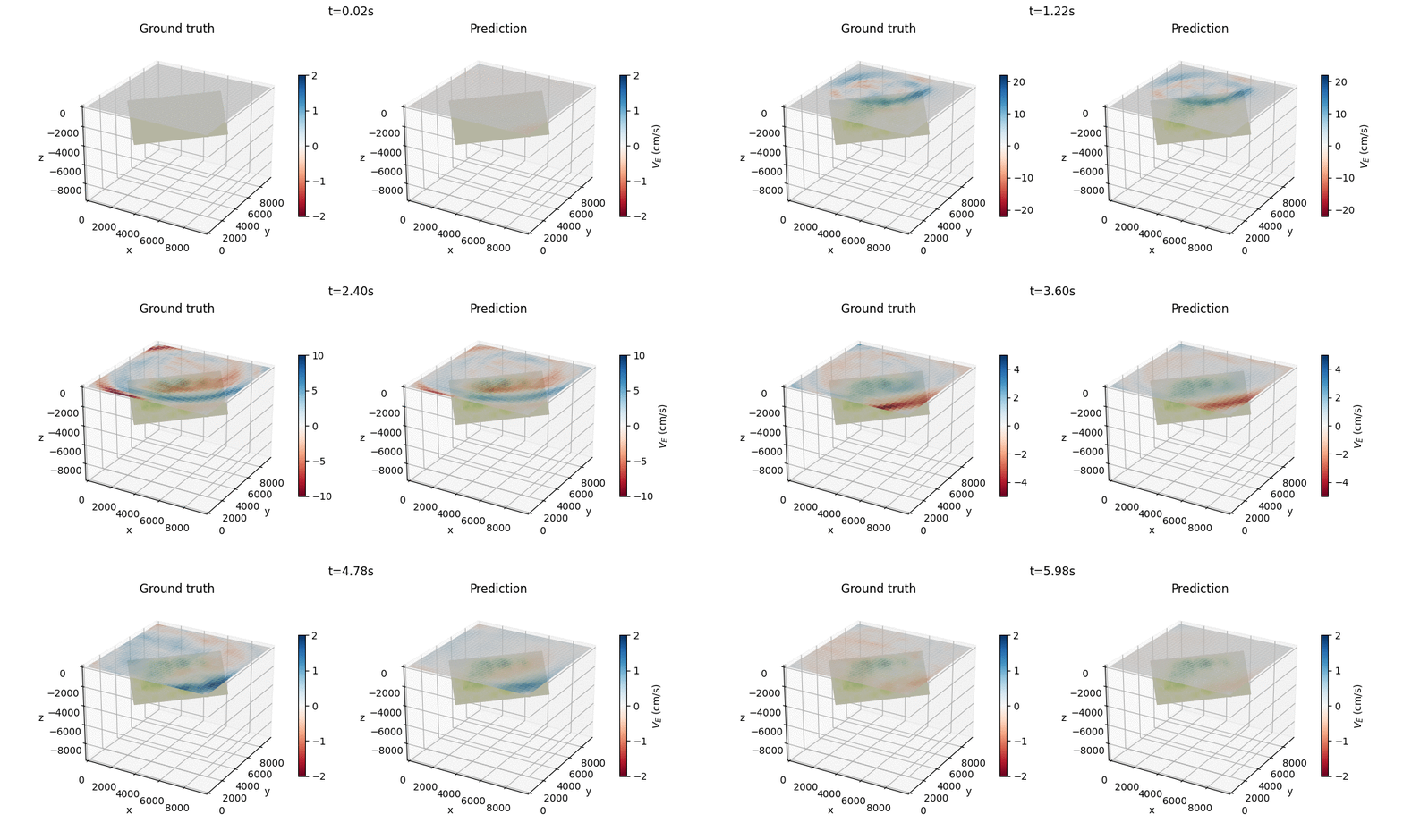
This research operation aims to integrate high-performance numerical simulation with generative and agentic AI in order to establish a new paradigm for the design and maintenance of critical infrastructures and facilities (nuclear power plants, high-speed railway lines, power transmission towers, wind farms, hydraulic networks, etc.).
To address the necessary adaptation of infrastructure to natural disasters, the activities of the research operation focus on defining and developing multi-physics digital twins of both future and existing structures. The objective is to make the design phase robust with respect to uncertainties (intrinsic and those related to external environmental agents), to plan and adapt maintenance, assess the structural health condition, predict ultimate service life, and enable real-time control of the infrastructure. The framework is based on machine learning and generative, multi-agent AI, which are essential for designing fast-inference meta-models that integrate with or replace numerical simulations and experimental campaigns. The initiative also focuses on solving inverse problems to investigate uncertainty and adjust predictions in real time.
To achieve these objectives, the initiative integrates Building Information Modeling (BIM), Light Detection and Ranging (LiDAR), Model-Based Systems Engineering (MBSE), ontological representation, high-performance computing (CPU, GPU, quantum computing), physics-conditioned generative and agentic learning pipelines (integrated via the Model Context Protocol or similar approaches), active learning, uncertainty quantification, and sensitivity analysis.
The ultimate goal is to provide both local and global estimates of natural and human-induced risks (whether isolated or resulting from cascading effects) associated with each infrastructure system within its environment.
Manager

OMEIR team, Simulation center
Filippo GATTI
Senior lecturer
Head of the OR3 research operation: Numerical simulation, machine learning and adaptive calibration for infrastructures